
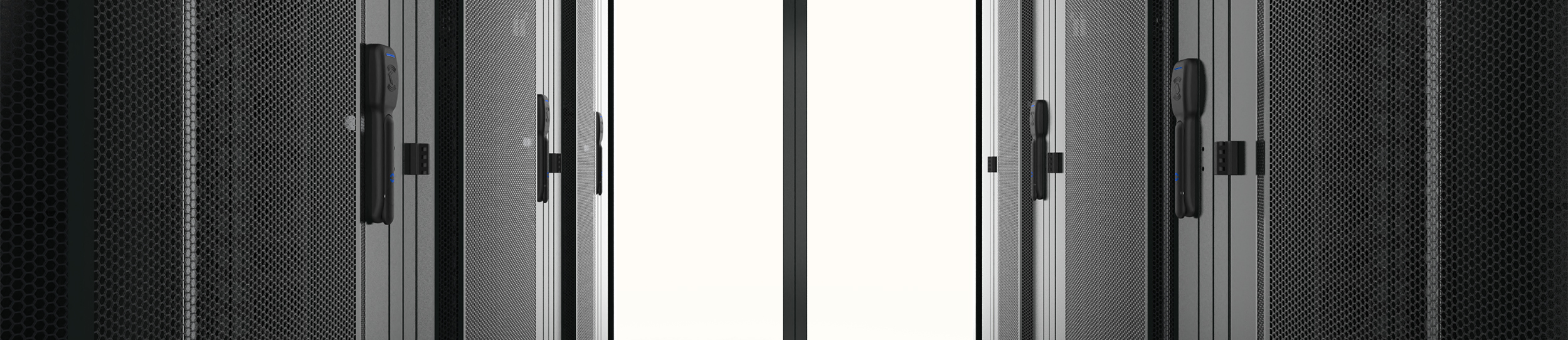
Data centers: the backbone of the digital era
Data Centers: where physical infrastructure determines digital performance, cost, and risk
Modern digital life feels ethereal. Cloud applications, artificial intelligence (AI), seamless video, companies operating in real time. But none of that floats in the air. Beneath that “invisible” layer is a brutally physical infrastructure called the data center. That is where the digital world takes shape: energy comes in, heat goes out, data flows, and applications are born.
And it is precisely at this point, where bits depend on steel, copper, glass, and air, that a huge part of the cost, risk, and performance of any digital service is decided.
If you manage engineering, telecommunications, or technology in an organization, this matters for a simple reason: a data center is not a server room. It is a computing factory. And, like any factory, the design of structured infrastructure (power, cooling, structured cabling, fiber optics, racks) determines energy efficiency, operational availability, and the ability to scale without breaking.
What a data center is today and why it remains the “backbone”
A data center is a controlled environment where computing, storage, and network resources are concentrated, protected by power, climate control, and physical security systems. Historically, they were spaces to host servers and telecommunications equipment. Today they are more than that: they are platforms that support hybrid cloud, edge services, 5G networks, AI workloads, and critical systems across entire sectors.
That evolution has brought two practical consequences.
The first is that business dependence on the data center has skyrocketed. When it stops, revenue stops, customer service stops, industrial control stops, logistics stops.
The second is that the margin for inefficiency has shrunk. Every wasted kilowatt becomes operational cost (OPEX). Every minute lost during an intervention becomes risk and service level agreement (SLA) penalties.
That is why discussing data center infrastructure is discussing business continuity.
Physical infrastructure: the invisible layer that determines performance and cost
The physical layer of the data center is the one almost nobody wants to see day-to-day, but it always appears when there are problems. Layout, power, cooling, cabling, and racks are the digital “chassis.” If the chassis is poorly designed, no software can compensate.
This is where the conversation about energy efficiency in data centers begins. Most organizations think about this by looking at lower-consumption hardware or more modern cooling systems. Sure, that matters. But efficiency starts earlier: in how you organize space, density, air and cable paths, redundancy, and the quality of physical connections.
A well-designed data center reduces losses, improves airflow, shortens maintenance time, avoids chaotic expansions, and delivers the same computing work with less energy.
Structured cabling: the nervous system of the data center
Structured cabling is the set of standards, practices, and components that organize physical network and telecommunications connections in the data center. It is not aesthetics. It is engineering applied to reduce variability, human error, and rework.
When cabling is planned as a system, you have defined routes, clear patching, consistent labeling, well-designed distribution points, and modular growth capacity.
The practical impact is huge. In real operations, most physical incidents do not come from exotic equipment failures. They come from simple things like the wrong cable connected to the wrong port, a patch cord crushed in a door latch, a connector with a violated bend radius, or a rushed expansion because no pathway was prepared.
Each of these situations increases mean time to repair (MTTR), raises the risk of downtime, and requires more skilled labor to maintain the same service level.
In addition, unstructured cabling creates a kind of physical technical debt: the day you need to double capacity, replace switches, or reorganize racks, the intervention becomes slow, risky, and expensive. In telecom, where scale pressure is constant, this is literally paying twice for the same network.
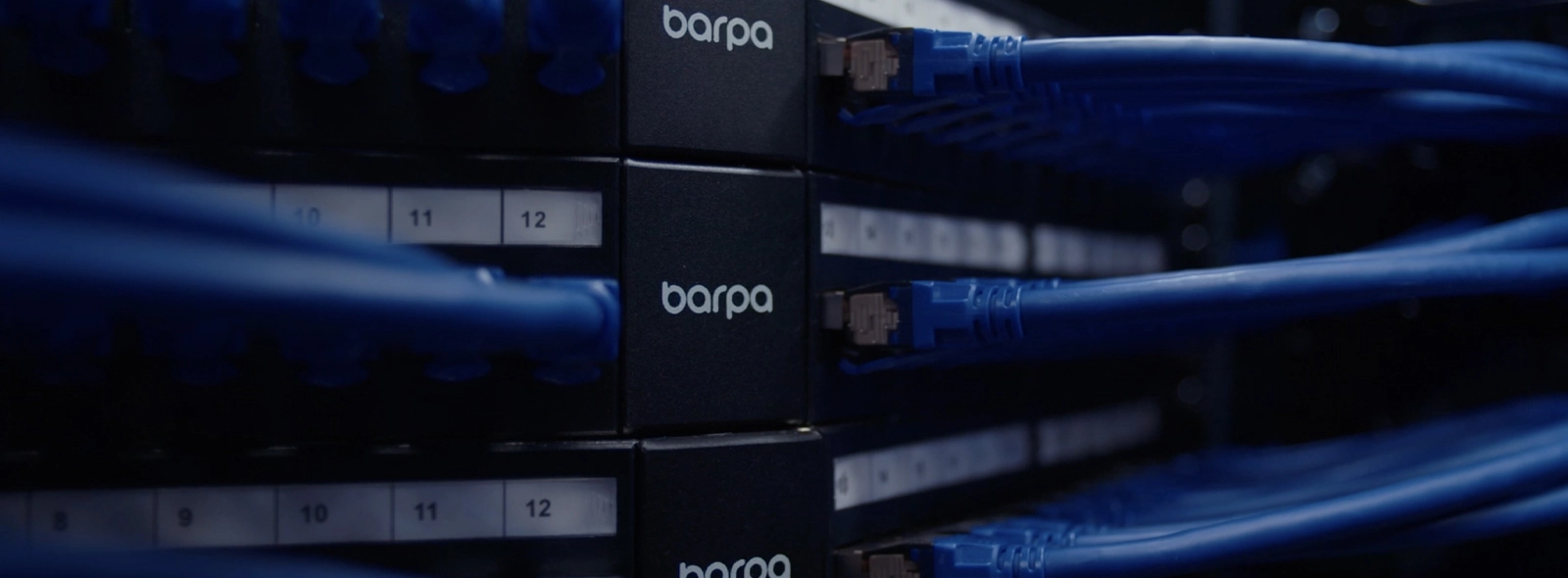
Twisted pair vs fiber optics: the right decision is not ideological, it is functional
Choosing between twisted pair (copper) and fiber optics in a data center is not a war of preferences. It is an engineering decision.
Twisted pair remains excellent for short-distance links inside racks and between nearby racks. It is simple to terminate, supports high port density on access switches, and has a mature and cost-effective ecosystem. In corporate environments and many mid-sized data centers, copper remains relevant because it solves the access layer very well with controlled cost.
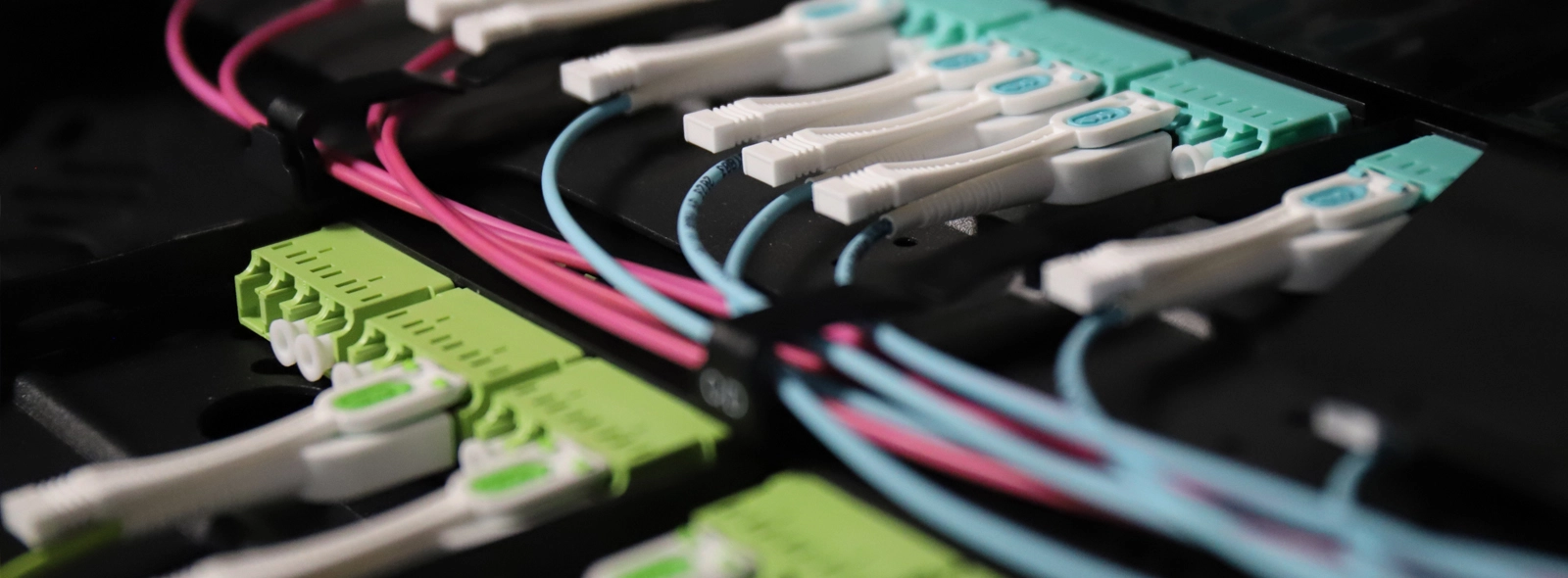
Fiber optics comes in when you need more bandwidth per link, longer distances inside the building, lower effective latency, immunity to electromagnetic interference, and clear scalability for new network generations. In modern data centers, fiber is becoming the natural backbone, especially between distribution zones, the network core, and interconnections to high-density equipment or AI clusters.
The key point is not “which is better.” It is understanding that a robust infrastructure uses both, each in the right place.
Mixing this without criteria produces poor results. A classic example in telco is connecting distant zones with copper because “we’ve always done it this way,” and then spending huge amounts solving attenuation, interference, and speed limitations. Or, at the opposite extreme, always using fiber where copper would have been sufficient, increasing termination, patching, and operations cost with no real return.
Racks and mechanical/thermal management: racks are not furniture
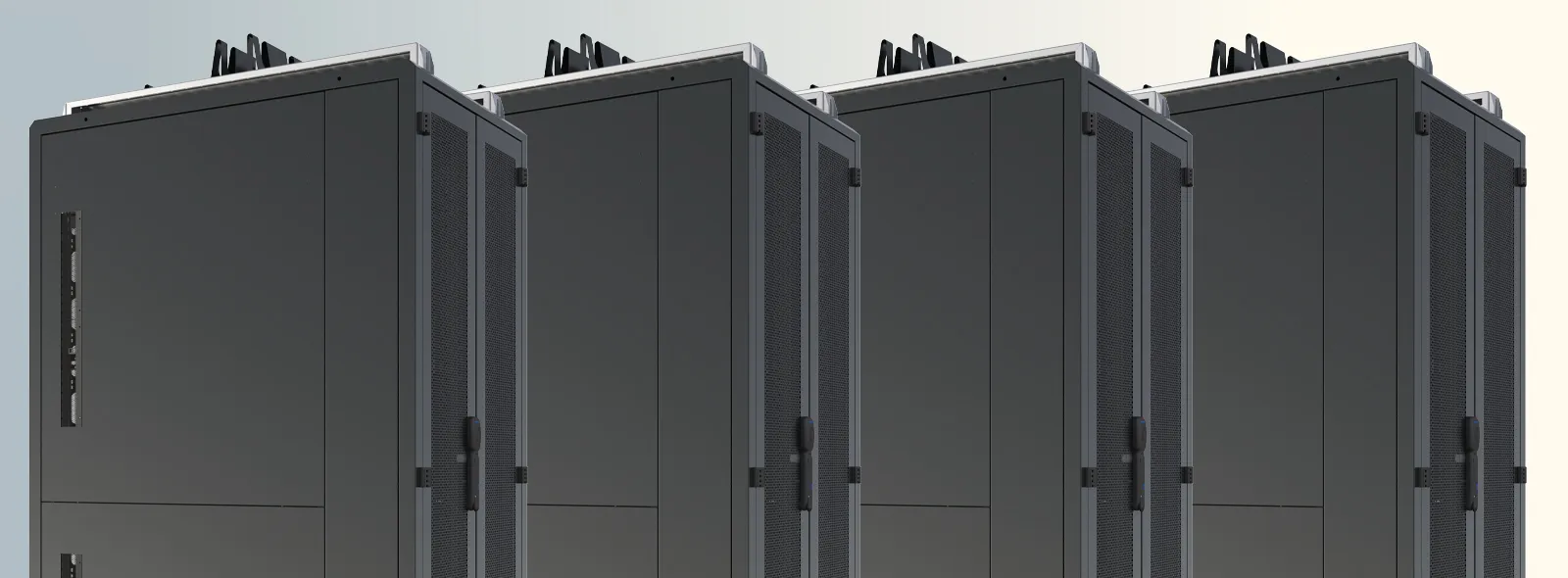
Racks are not furniture. They are an active part of data center engineering. They determine equipment density, cable organization, airflow paths, and even operational risk during interventions.
A well-chosen and well-installed rack facilitates vertical and horizontal cable management, separates power from data when needed, and creates space for proper bend radius both for twisted pair and fiber optics. This prevents physical losses, intermittent failures, and thermal hotspots.
In a growth phase, standardized and modular racks allow you to add capacity without redesigning the entire space. The gain is not only operational. It is financial. You reduce expansion time, minimize planned outages, and maintain consistency for audits and compliance.
This is where solutions from suppliers like barpa, with twisted pair cabling, fiber optics, and racks designed for telco and data center environments, naturally come into play: not as a “brand,” but as an engineering component that directly impacts infrastructure lifecycle.
Energy efficiency: it is not just “green” hardware
Talking about energy efficiency in data centers without talking about physical infrastructure is like talking about a car’s fuel consumption while ignoring tires and aerodynamics. Energy is not lost only in servers. It is lost in the path between electricity and useful computing, and in the extra cooling effort required to correct physical layout problems.
What separates an efficient data center from an expensive one is not only the installed equipment. It is the way the infrastructure was designed to avoid invisible waste.
Air path and cable path: two variables that intersect
Cable management has a direct effect on cooling. Disorganized cables create barriers to airflow inside the rack and in the aisle. This increases the probability of hotspots, forces the climate system to work harder, and shortens hardware lifespan.
In modern practices, the data center is designed with cold/hot aisles, containment, and cabling routes that do not invade the air path. If cabling crosses the front of servers, blocks fans, or creates bundles at the top of the rack, you are wasting energy without even noticing.
At the scale of dozens or hundreds of racks, this becomes serious cost.
Smart redundancy: availability without waste
Redundancy exists for one reason: availability. But poorly designed redundancy can double consumption and complexity without real need. The right design is the one that balances risk and cost.
Duplicating network and power paths makes sense for critical workloads. But duplicating everything everywhere “because it’s safer” usually creates infrastructures that are difficult to operate, expensive to maintain, and more prone to human error.
Smart redundancy is redundancy that is tested, documented, and does not force a technician to physically juggle inside the rack to follow a procedure.
Once again, structured cabling and appropriate racks are part of this equation. Redundancy is not just having two cables. It is having two cables on separate routes, clearly identified, and easy to intervene on without disconnecting what should not be disconnected.
Operations: when infrastructure sets the pace
Data centers live by operations. The design may be perfect on paper, but what separates an elite environment from a problematic one is the daily routine: maintenance, expansions, swaps, troubleshooting.
And physical infrastructure dictates the speed and risk of those tasks.
In a typical operation, the largest source of incidents is human intervention in the physical environment: patching, module swaps, reorganization, port identification, equipment movement.
Every extra minute in an intervention increases error risk, labor cost, and downtime time in case of failure.
A clear infrastructure, with structured cabling, logical routes, and organized racks reduces that risk. In practice, this is “physical automation”: making the environment behave predictably. And predictability is what allows teams and services to scale without losing control.
The trends reshaping infrastructure: density, distribution, and speed
Data centers are being pulled by three main forces: density, distribution, and speed.
Density grows with AI and high-performance computing workloads. More density means more heat per square meter and more internal traffic, which puts physical infrastructure back at the center of the discussion. An environment that was sufficient for classic workloads can fail when you deploy very dense racks without revisiting cooling, racks, and backbone.
Distribution grows with edge computing and 5G networks. You start having micro data centers in central offices, factories, hospitals, and points of presence (PoP). In such locations, simplicity and robustness of physical infrastructure are even more critical because you do not always have specialized teams on site.
And speed grows with new network generations. This pushes the backbone toward increasingly present fiber, with modular and pre-terminated solutions to reduce installation time and human error.
Those who design data centers today must think of infrastructure as an evolving platform, not a snapshot of the present.
Infrastructure as a competitive advantage: where digital stops being abstract
The central idea is simple: data centers are the backbone of the digital era because they are the point where digital becomes real. And at that point, physical infrastructure is not a detail. It is leverage.
Structured cabling, well-applied twisted pair, a properly sized fiber backbone, and racks designed for density and airflow help reduce OPEX, lower downtime risk, and accelerate growth.
This translates into predictable costs, higher availability, and the ability to launch new services without rebuilding the foundation every time.
In a market where every organization wants to be faster, more resilient, and more sustainable, ignoring infrastructure is handing those gains over to chance. And chance usually comes with a high bill.
The best time to ensure energy and operational efficiency in a data center is at the initial design stage. The second best is now, before physical debt becomes too large.
And when you need network and telecom components up to that challenge, whether twisted pair cabling, fiber optics, or racks, it makes sense to look at solid ecosystems like barpa’s. At the end of the day, what matters is not the logo. It is stability, scalability, and total lifecycle cost (Total Cost of Ownership, TCO).
Conclusion: technological maturity starts in the physical
Data centers are not just technology. They are applied engineering with direct business impact. Physical infrastructure is what turns electrical power into digital services that deliver revenue, efficiency, and trust. And it is also where much of the waste hides when decisions are made “just to get by.”
If you want an efficient, resilient data center ready to grow, start with the basics done right: structured cabling, the right choices between twisted pair and fiber optics, appropriate racks, and a layout that respects the air path and the cable path.
That is not glamour. It is competitive advantage made of steel, glass, and copper.
If you are planning an expansion or reviewing your data center infrastructure, it is worth performing a structured technical assessment of the backbone, cabling, and racks, focusing on energy efficiency, operational risk, and scalability. Talk to our team to map the current scenario and define an evolution path based on engineering, not improvisation.

Sorry, the comment form is closed at this time.