
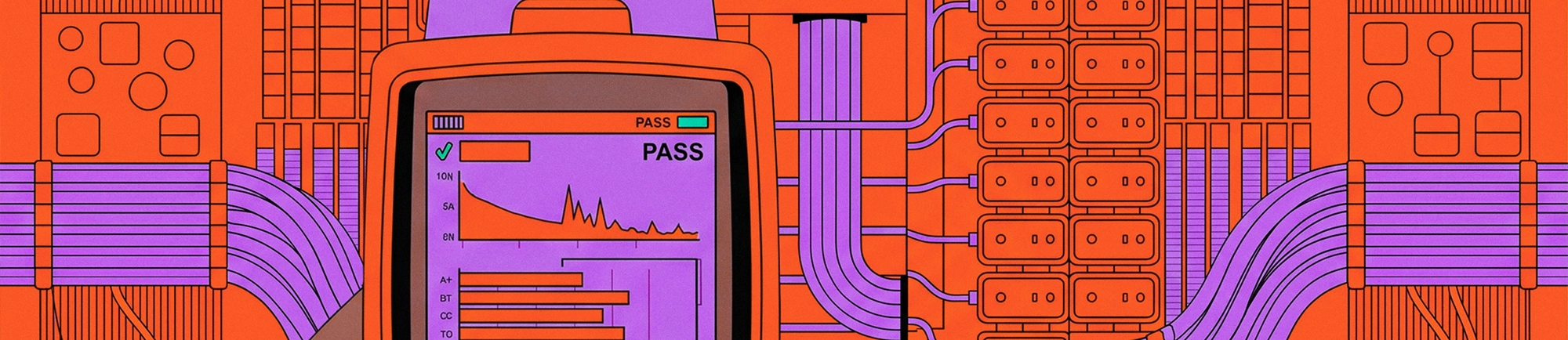
Certification: The Basis of Reliability in Structured Networks
In the world of telecommunications and technology infrastructure, structured networks represent the nervous system of any organization. Critical information circulates on them, digital services are sustained, and daily productivity is enabled. However, the true guarantee that a network works correctly does not lie only in the quality of its components or in the experience of its installation, but also in a key process that is often underestimated: certification.
What is Structured Network Certification?
Certification is the process by which it is verified, through technical tests and specialized tools, that a cabling installation complies with the standards established by international regulations (such as ISO/IEC, CENELEC or TIA/EIA). This process not only validates that the network “works”, but ensures that it does so within the expected performance parameters.
In other words, certification is not synonymous with basic testing: it is an exhaustive validation of the real performance of the infrastructure.
Beyond installation: the guarantee of performance
A network may appear operational at first glance, but have latent failures that impact performance in the medium or long term. The certification makes it possible to detect invisible problems such as:
Identifying these issues before commissioning prevents network outages, slow data transmission, and costly rework.
Regulatory Compliance and Technical Support
One of the pillars of certification is compliance with international standards. This is especially relevant in corporate projects, data centers or critical facilities, where regulatory compliance is not optional.
A certified system ensures that:
In addition, many manufacturers, like us, require certification to provide 25-year extended warranties on their products and applications, adding an extra layer of customer security.
Trust for all parties involved
Certification provides peace of mind at all levels of the project:
Certification reports act as verifiable technical documentation, useful in both audits and future diagnostics.
Risk reduction and cost optimization
Although it may be perceived as an additional step, certification actually reduces costs in the long run. Detecting errors during the deployment phase is significantly cheaper than correcting them once the network is up and running.
In addition, it minimizes:
Certification planning: key to project success
For certification to serve its purpose, it should not be approached as an isolated final phase, but as an integrated process from the beginning of the project. Proper planning makes the difference between simple validation and real quality assurance.
1. Define standards and scope by design
Before starting the installation, it is essential to establish:
This avoids ambiguities and ensures that all actors work under the same criteria.
2. Select suitable tools and equipment
The use of approved and calibrated certifiers is essential. Low-quality or uncalibrated measuring equipment can result in unreliable or even invalid results for audits or manufacturer warranties.
3. Integrate certification into the timeline
Certification should be planned as part of the workflow, not an afterthought. Some good practices include:
This allows errors to be detected early and avoids an accumulation of incidents at the end of the project.
4. Train the technical team
The personnel in charge of the certification must be properly trained both in the use of the equipment and in the interpretation of results. A poorly executed measurement can be just as damaging as a faulty installation.
5. Set clear acceptance criteria
Defining what is considered “approved” or “rejected” facilitates decision-making and avoids arguments during project delivery. These criteria must be aligned with the standards and with the requirements of the client.
6. Document and organize the results
A certification without documentation loses much of its value. It is essential:
This documentation will be key for maintenance, audits and future expansions.
7. Foresee contingencies and rework
Even well-executed projects can cause failures. Planning time and resources to correct incidents avoids delays and tensions in the final phase.
Practical tips for certifying correctly
Beyond planning, the execution of the certification requires attention to detail and good practices in the field. These tips help ensure reliable and professional results:
1. Check equipment calibration
Before you begin, make sure that the certifier is calibrated and within its validity period. An incorrect calibration invalidates the entire process.
2. Use certified test patch cords
The patch cords used during certification must be in perfect condition and be suitable for the category being certified. A faulty patch cord can lead to false failures.
3. Maintain consistency in methodology
Always use the same test type (channel or permanent link) as defined in the project. Mixing methodologies generates inconsistent results.
4. Take care of wiring handling
Avoid overbending the cables, tensioning them or handling them during measurement. These factors may temporarily affect the results.
5. Check and clean connectors
In copper networks and especially in fiber optics, dirt on connectors is a frequent cause of failures. Inspecting and cleaning before measuring is an essential practice.
6. Analyze failures, not just repeat tests
If a link fails, it is not enough to repeat the measurement. It is important to analyze the cause (connection, interference, installation) and correct it appropriately.
7. Correctly label each point
Poor identification can lead to confusion in reporting and future maintenance issues.
8. Save and back up results
Secure copies of reports in different formats and locations. Loss of certification data may involve unnecessary retesting.
9. Not Leaving Certification to End
Progressive certification during installation allows errors to be detected in time and reduces rework.
To obtain the 25-year barpa Warranty, it is essential that all links, both fiber optic and copper, included in this Warranty are certified. These certificates must be sent for analysis in the original format of the certifier. The certifier used in the certifications must be within the validity period of their calibration.
Conclusion
Certification is not a luxury or an optional procedure: it is the foundation on which the reliability of a structured network is built. It represents a real guarantee of performance, compliance and peace of mind in the execution of the project.
But its true value is achieved when it is planned correctly. Integrating it from the design, executing it rigorously and documenting it properly transforms certification into a strategic tool.
Because in an environment where connectivity is everything, it’s not enough for the network to work: it must do so optimally, consistently and testablely.

Sorry, the comment form is closed at this time.